Australian biosimilar policies not delivering on intended outcomes: where to from here?
Published on 15 December 2025
Generics and Biosimilars Initiative Journal (GaBI Journal). 2025;14(3).93-102.
Introduction/Background: Biosimilar medicines represent an opportunity to expand access to medicines and reduce costs for payers through increased uptake. Australia is not fully capitalising on this opportunity relative to other Organisation for Economic Co-operation and Development (OECD) countries, reflected in comparisons of biosimilar medicines uptake by other OECD countries. Understanding of international examples can help to shape policy measures in Australia. |
Introduction/Background
Access to medicines and the burden of cost in Australia
Biosimilar medicines represent an opportunity to expand access to critical medicines through lowered costs for payers [1] including the Pharmaceutical Benefits Scheme (PBS), see Figure 1. However, Australia has not taken full advantage of this opportunity [2, 3], meaning that patients wait longer to access some medicines than in other countries, clinicians spend more time performing administrative tasks including completion of authority paperwork required by the PBS for patients to gain and maintain access to medicines restricted by the PBS rather than treating patients, and Australia has been less successful in driving uptake of biosimilar medicines than better performing Organisation for Economic Co-operation and Development (OECD) countries [2]. This limits the ability of the Australian Government to leverage policies which drive cost saving through uptake of biosimilars [4, 5], which could be spent in other critical areas [5].
Figure 1: Areas of opportunity created through increased use of biosimilar medicines
Biosimilars are highly similar versions of often expensive biological medicines [5]. The Australian Government states that, ‘Biosimilar medicines are used to treat the same diseases, in the same way, as the reference biological medicines. Biosimilar medicines have been tested and shown to be as safe and effective as the reference biological medicines [6]’.
Biological medicines have transformed treatment of many diseases including cancer, Crohn’s disease, and rheumatoid arthritis [7]. Biological medicines now represent substantial and increasing costs for healthcare budgets [8]. It is important that payers achieve savings, so they can make these medicines available to more patients and to make them available earlier in treatment journeys, see Figure 1. Additionally, payers need to achieve savings to create headroom to fund more of these expensive medicines as they come to market [1]. However, escalating costs are a barrier to delivering on these goals [1].
Methods
This study was undertaken in two phases. First, a literature review of Australian and international policy was conducted by scanning for relevant literature using MEDLINE, Google Scholar, PBS literature and reports, local association literature and reports, OECD biosimilar uptake reports, and grey literature conducted to inform stakeholder summit meeting in early 2025. References were selected based on relevance to Australia-specific biosimilar uptake policy drivers, comparable biosimilar uptake data, and policy drives applied in comparable markets. Based on the findings of the literature review, there is opportunity to improve biosimilar uptake in Australia, leading to improved efficiencies and sustainability.
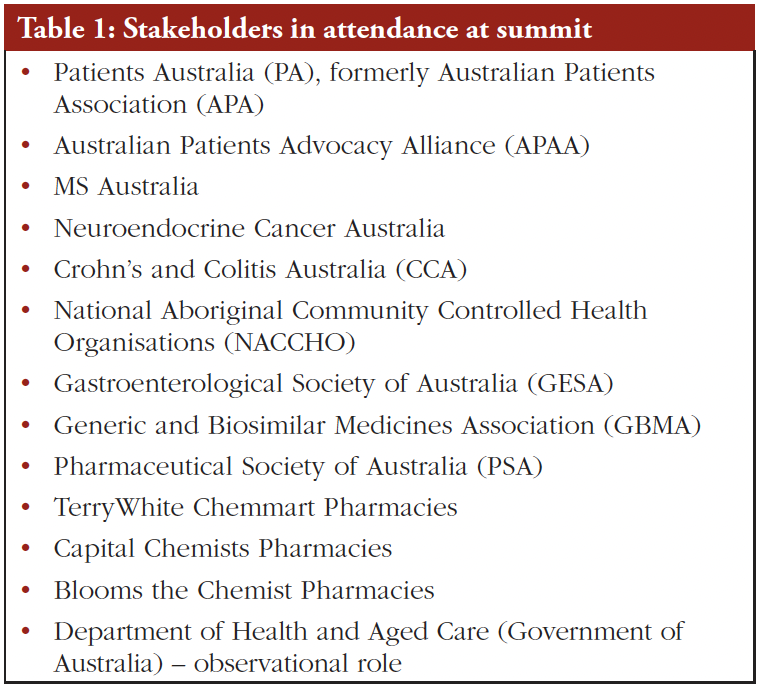
With this understanding Sandoz chose to bring together key stakeholders, including patient advocacy, clinician advocacy, pharmacists, industry, and government, see Table 1, to discuss a number of key issues surrounding biosimilar medicines uptake, barriers to uptake, downstream effects, and options for driving improved uptake, see Table 2, during the Pioneering Access for Patients Through Biosimilar Medicines Summit held in Canberra, Australia on 10 February 2025.
Table 1: Stakeholders in attendance at summit
Table 2: Summit agenda: key discussion areas
Results
Literature review
The first biosimilar medicine officially entered the Australian market in 2010 [9]. Since then, over 50 biosimilar medicines, see Table 3, have been approved [10]. Biosimilar medicines, which are less costly to produce, represent an opportunity to both expand access and create earlier access to medicines for patients through reduced or removed restrictions for access by payers, such as the PBS, when cost savings are realized [1].
Table 3: Biosimilars approved by the TGA in Australia (as of 23 Feb 2024)
The pathway to achieving expanded access for patients in need is through cost reductions with increased use of lower cost bio- similar medicines, allowing the PBS to relieve cost containment mechanisms, such as authority requirements [11, 12]. PBS authority requirements are developed based on submissions made by sup- pliers. PBS submissions by suppliers are made following Therapeu- tic Goods Association (TGA) regulatory approval of the medicine. PBS submissions are considered through the lens of cost benefit.
PBS authority requirements are introduced for products where access is restricted to prescribing by specific clinicians for patients displaying specific conditions, severity of conditions, and/or having failed therapy on other less expensive medicines more effective medicines [13], meaning patients may wait longer and see progression of their diseases prior to accessing PBS funding for more expensive medicines [13]. Authority requirements function as important cost containment mechanisms for the PBS. These restrictions require clinicians to document conditions met by their patients in order to have the medication claim covered by the PBS. Steps include assessments of patients and their conditions and documentation which may be completed online but may take from minutes to several weeks for approval. These authority requirements may need to be completed up to every six months throughout the course of treatment for the patient [14].
Often, medicines are approved for funding by the PBS on a more restrictive basis than the scope of indications approved by the TGA [15]. This means that patients may not be able to access PBS funding for certain medications, despite meeting TGA criteria. When PBS restrictions are placed on medications, clinicians may be able to utilize various pathways to prescribe them, including via online, written, or telephone authority processes. These pathways vary in their administrative and clinical monitoring and reporting requirements. In some cases, clinicians may be required to monitor and report on pathology results and symptomatology displayed by the patient every six months. Many clinicians report that these require- ments excessively burden them administratively.
The Pharmaceutical Benefits Advisory Committee (PBAC) reviews and advises on changes to these requirements from time to time. Reviews by PBAC can be triggered by medicine cost reductions, by clinician submissions, and by supplier submissions.
How do the PBS cost reduction mechanisms work?
A cornerstone of the PBS is realising financial savings through entry of lower cost subsequent products [13]. The PBS has put into place two key policies to deliver savings, known as Statutory Price Reduction (SPR) [16] and Simplifi ed Price Disclosure (SPD) [4].
The PBS follows a similar economic cycle for all reference medicines, with patents expiring and generic or biosimilar versions entering the market, see Figure 2. At first entry of a generic or biosimilar, SPR, see Figure 3, typically requires that the price of the medicine paid by the PBS drop by 25%. For example, if a biological medicine is priced at AU$1000.00, when the biosimilar enters the market, the PBS now pays AU$750.00 for either the reference biological or the biosimilar [13, 16], creating savings.
Figure 2: The PBS economic cycle [4, 16]
Figure 3: Statutory Price Reduction [16]
The SPD process begins once a biosimilar or generic medicine is listed. It is triggered by the discounting that occurs in the retail pharmacy setting [4]. This mechanism allows suppliers to sell medicines to pharmacies at a price lower than the amount reimbursed by the PBS. Every six months, suppliers are required to report the value and volume of these discounts [14]. The PBS conducts a calculation, weighted average disclosed price (WADP) of the discounts against the total selling volume of that medicine, establishing a new price for both reference and biosimilar, based on the discount calculation, with subsequent price reductions occurring over time, see Figure 4 [4]. Eighteen months after the first biosimilar entry, the reference medicine is removed from the SPD calculation [4], so from that point, the only price reductions that can be achieved are through discounting offered by biosimilar suppliers. Cost reductions and downstream savings achieved by SPD can be seen as a simple formula of total volume (market share) of biosimilar medicines and size of discounts offered [4].
Figure 4: Simplified Price Disclosure (SPD) [4]
The two parts required to drive cost reductions through SPD are market share and competition in the biosimilar market. With additional market share, we can expect to see larger SPD reductions. However, competition is also required to drive discounting to pharmacies. Multiple biosimilar suppliers competing for market share are more likely to offer larger discounts. Sales volume multiplied by discounts drives the SPD model, creat- ing savings [4]. These savings can be used to fund expansion of access to these medicines, and to fund new medicines [5].
Biosimilar medicines uptake
Retail pharmacies in Australia represent 68% of the total number of PBS subsidised prescriptions dispensed in Australia [3]. This means that retail pharmacies are very important in the overall economic outcomes of the PBS. Unfortunately, Australia is behind most of its international counterparts in biosimilar uptake in retail pharmacies, seeing anti-TNF biosimilar uptake rates below 40% [3]. compared to OECD average of 67%, see Table 4, [2]. This low uptake makes the market less attractive for suppliers, resulting in reduced competition. As discussed in section 1.2, discounting by suppliers drives PBS cost reductions beyond the original Statutory Price Reduction (SPR) of 25%. Lack of competition means less discounting by sup- pliers to pharmacies, leading to less PBS price reductions, meaning less savings for government. This lack of savings limits the govern- ment’s ability to expand access to these medicines and to fund new ones.
Table 4: Share of anti-TNF biosimilar medicines in the accessible market (percentage uptake vs reference brand)* [2, 3]
An additional consequence of lack of competition is a supply risk. When supply of a medicine is skewed towards a single supplier, with the biosimilar market share limited, Australia incurs risk of supply short- ages if that manufacturer is unable to supply the medicine. Under the current market share circumstance, biosimilar manufacturers may not have capacity to backfill an unexpected market shortfall, resulting in risk for patients not able to access medicines. This speaks to lack of sustainability of the biosimilar market in Australia.
Biosimilar policy drivers in Australia and internationally
Australian public hospitals, providing government funded medicines for inpatients (patients admitted to hospitals) purchase medicines through tender agreements, effectively lowering costs [17]. Ten- dering has contributed to strong uptake of biosimilar medicines in hospitals. In Australia, biosimilar medicines used exclusively in hospitals see, in many cases, uptake rates over 80% [18].
However, as discussed, in Australian retail pharmacies, the situa- tion is different. Retail or community outpatient pharmacies (over 4,200 pharmacies in Australia) provide PBS and non-PBS funded medications for ambulatory patients outside of hospital settings. 68% of the PBS funded prescription 2023-24, including a large pro- portion of anti-TNF medicines are dispensed through retail pharmacies [3], meaning they represent a critical component of overall biosimilar medicine uptake rates. These pharmacies do not utilize tender mechanisms. Rather, an open-competitive model prevails.
The Australian Government implemented two biosimilar uptake drivers at part of the 2017 federal Budget process, see Table 5. There have been no material changes to these drivers since they were introduced in 2017.
Current drivers of biosimilar medicines in Australia for retail pharmacies include (Table 5):
Table 5: Current biosimilar uptake drivers in Australia [5]
However, as discussed, uptake rate of biosimilar medicines in Australian retail pharmacies remains one of the lowest among OECD countries [2, 3]. Current (2023-24) anti-TNF biosimilar medi- cines, including infl iximab, etanercept, and adalimumab, uptake rates in retail pharmacies remain at 36% [3], well below the 2022- 23 OECD average of 67% [2], with some country uptake rates over 90% [2, 19-20]. This low uptake rate in Australia results in missed savings for government and potentially continued restricted access to treatment options for patients. Biosimilars have the potential to significantly reduce the financial burden on the PBS by lower- ing the costs of biological medicines and to create sustainability through more equitable distribution of market share [5].
The PBS recognised the importance of biosimilar medicines in creating fi nancial savings, so price disclosure policies, including SPR and SPD were applied to brand biological and biosimilar medicines the same ways that they have been applied to small molecule brand and generic medicines [14]. Additionally, PBS policies that allow the substitution of biological reference medicines with their corresponding biosimilars (under the ‘a’-flagging designation) mean pharmacists can offer biosimilars, similar to how they offer lower-cost generic medicines [5, 21]. However, prescribing clinicians can override this by indicating ‘substitution not permitted’ on the prescription, meaning the prescribed brand must be dispensed [22].
The application of free pricing of generic medicines into retail pharmacies by manufacturers has resulted in more competition. This occurs when prices of generic medicines sold into retail pharmacies are low enough that those pharmacies can dispense these medicines at prices below the general co-payment threshold, and patients can benefit from a lower co-payment. These price discounts offered by suppliers to pharmacies are then captured through SPD, leading to lower PBS listed prices, and PBS savings [4].
However, patients using biosimilar medicines are not able to benefit from a lower co-payment, as biosimilar medicines and their corresponding reference brands are priced above the general co-payment threshold [14]. As discussed, Australia has employed other drivers in retail pharmacies, creating differential prescription authority approvals for biosimilars versus their corresponding reference brands [5]. This could, in certain cases, make the process simpler for clinicians to prescribe the biosimilar medicine. Additionally, the PBS recommends that clinicians prescribe biosimilars preferentially for treatment-naïve patients [5]. However, there was no requirement compelling clinicians to comply, nor any specific targets set. This is important because non-binding quotas or targets tend to be missed [23].
Additionally, and in line with other countries, including the likes of Belgium, Canada, France, and Germany [24] the Australian Government funded an educational campaign for Healthcare Professionals (HCPs) and patients, delivered by the Generic and Biosimilar Medicines Association (GBMA) with funding ceased in June 2022 [25].
In Australia, biosimilar uptake measures function as an effective proxy for the savings generated though price reductions, particularly when we look at how Australia leverages pricing mechanisms, including SPD, to achieve savings [4, 16].
Attracting several suppliers to provide the same medicine and encouraging competition for market share can be expected to drive increased discounting, which triggers SPD [4, 13]. Policies driving increased security of market share for biosimilars can be expected to attract interest from suppliers, and in turn, drive competitive pricing which is required for the PBS to achieve savings through existing mechanisms. Rather than disregarding the existing and successful PBS frameworks, the proposed policies have been developed taking a balanced approach, carefully considering this framework, and leveraging learnings around mixtures of policies that have driven success internationally.
International examples show that the countries achieving high levels of biosimilar uptake apply a balanced mixture of policy measures [26]. A balanced mixture includes both supply- and demand-side measures [26]. Supply-side measures are those aimed at affecting pricing and reimbursement of medicines through effects of key healthcare system stakeholders [27]. Demand-side measures are those directed at downstream stakeholders, including patients, pharmacists, and clinicians in their activities including prescribing, dispensing, and using medicines [27].
Supply-side measures include such measures as tendering and pricing mechanisms such as price linkage and reference pricing [26]. These mechanisms are specifically focused on affecting the reimbursement costs and pricing of medicines, and not on the downstream stakeholders. Tendering, Price Linkage, and Reference Pricing are applied in combination by several countries, including Germany, France, and Poland, each seeing price change rates of anti-TNF biological medicines of over 40% since biosimilar entry [1, 19, 26]. Notably, Australia applies all three of these measures [24]. However, tendering is only applied in in-patient settings [24].
Achieving cost saving is half of the picture. Driving uptake is the other critical component of success in leveraging entry of biosimilar medicines. The most successful countries in driving the uptake of biosimilar medicines utilize a mixture of demand-side measures, including building driving social trust through economic incentives that benefit the populations most affected [28], to complement the savings generated through supply-side measures [26].
Italy, Spain, Sweden, and the UK are examples of countries that leveraged incentives or penalties to encourage clinicians to prescribe biosimilar medicines [24, 26]. All four of these countries also have utilized patient insurance or co-payment differentials to encourage patients to use biosimilar medicines [24, 26]. These measures complement their recommendations or guidelines to utilize biosimilar medicines [24, 26]. Each of these countries sees an uptake of anti-TNF biosimilar medicines of at least 65% but up to 88% (UK) [2]. This tells us that a mix of demand- and supply-side measures are critical to driving both savings and sustainable uptake of biosimilar medicines. Australia exercises primarily supply-side measures to achieve savings through biosimilars, including SPR and SPD. The application of ‘a’-flagging and permitting substitution at the pharmacy level can be considered demand-side measures. However, the ability of the prescribing clinician to override this by indicating ‘substitution not permitted’ on the prescription, mitigates the potential advantages of this measure. Furthermore, the PBS has created a differential in authority requirements, making it simpler, in some cases to prescribe a biosimilar [5]. However, policy changes, such as those in October 2023, have removed some incentives for prescribers to choose a biosimilar over a reference biological, effectively reducing the authority gap between reference biologicals and corresponding biosimilars [29].
There are limited demand-side measures in Australia to encourage biosimilar uptake. International examples show that incorporating demand-side measures that positively affect patients and clinicians can contribute to success. For example, one study of 10 European countries found that differential patient co-payments were used to encourage biosimilar adoption in all of them [26]. This same study showed that seven of 10 countries applied financial incentives for prescribing clinicians, while eight countries applied prescribing conditions or guidelines [24]. Additionally, it showed that inclusion of demand-side measures led to more sustained biosimilar uptake, while supply-side measures led to shorter-term successes [26].
It is important that we carefully consider international examples and what has driven success. It is also important to apply these learnings to our current PBS framework, incorporating measures that will work in concert with this framework.
Policy summit proceedings
Keynote speakers
To open, Clint Holland, General Manager, Sandoz Australia/NZ presented policy options for driving improved uptake of biosimilar medicines for consideration and discussion during the summit, see Table 6.
Table 6: Pioneering access for patients summit − policies under consideration
Chris Campbell, General Manager – Policy & Program Delivery with the Pharmaceutical Society of Australia (PSA) followed by offering the perspectives of the pharmacist. Chris highlighted the importance of creating financial headroom in the PBS and Health budgets, which will support innovation. He also spoke about the importance of ensuring we get value for money from the PBS, as one of the most successful public–private partnerships in Australia. Referring to the above policy proposals, Chris indicated that:
‘The PSA sees them as common sense and these policy proposals are easy to support’.
Further, he stated that health care should be demand-driven and evidence-based, and that policies like these support this approach. Chris concluded by discussing the Scope of Practice review under consideration by the government, indicating that the PSA fully supports all recommendations, and that we need to move with the future to enable access across the board.
Dr Nick Coatsworth of the Patients Australia (PA), formerly Australian Patients Association (APA), presented to the attendees on the clinician perspective. His initial comments reflected on how fortunate Australians are to have a sustainable healthcare system with broad access.
‘In an era of increasing access to medicines we take actions that reduce costs and continue access’.
He spoke about his own experience as a clinician treating a patient that needed a biosimilar medicine. The application was challenging, and it took a long time. This highlights the importance of simplifying processes for clinicians, allowing for easier and faster access to medicines for patients. Dr Coatsworth went on to discuss how we can approach this problem, by talking about why things are difficult, what is the root reason and retain the reason for something being there, but look to streamline, thinking specifically about PBS authority requirements. We need criteria, but we do not want patients to encounter significant deterioration in their conditions before accessing this medicine. Dr Coatsworth concluded by saying that from the PA perspective, there is some significant alignment to what Sandoz is proposing.
Deidre Mackechnie, CEO of the Australian Patients Advocacy Alliance (APAA), presented the patient perspective. The APAA represents patients with chronic and complex diseases, bringing together nearly 60 relevant peak bodies. She reflected on the fact that many issues are not disease specific but focus on the needs across the health sector. One of the current focus areas for APAA is access to treatment, which has the potential to expand access for patients to cost-effective treatments that help them live better. Deidre referred to the APAA commitment to full implementation of the Health Technology Assessment (HTA) review, but that this will incur significant costs.
‘The policy proposals discussed here have the potential to deliver significant savings for government, which can help to offset costs of the HTA implementation’.
Further to this, Deidre reflected on the potential of these policies to deliver reduced PBS authority burden, freeing up clinician time for clinical engagement, face to face with patients.
Key themes
Switching to biosimilar medicines
Switching to biosimilars was a key point of discussion, with indications that switching from reference biologicals to biosimilars in pharmacies is not like switching to generics. The conversation between some pharmacists and patients is easy and it flows. However, in other cases it is the opposite, and substitution is zero. Without a price differential for biosimilars, the pharmacist is relying on the altruism of the patient, and they have other things to think about.
‘If the doctor hasn’t prescribed the biosimilar, then the conversation ends without price differential’.
It was noted by a clinician in attendance that much has changed in the last five to seven years. He indicated that when biosimilar adalimumab was first introduced in Australia, there was substantial concern about biosimilar medicines, but that is much better now. However, a key question was posed by one of the pharmacists in attendance, asking if a specialist will change their product choice if it delivers savings to government, surmising that this was unlikely. This was followed up with the statement that clinicians are generally aware to some extent of out-of-pocket costs for patients, so could this affect their product choice.
A pharmacist in attendance indicated that the lack of price differential for patients deciding on reference biological or biosimilar medicines makes it difficult for pharmacists to convince patients to switch, and that success of generics could be attributed to the difference in price for patients. Further, mentioning to the patient that switching to a biosimilar medicine saves taxpayers money but would not save them any out-of-pocket costs makes it difficult to keep the conversation going. It was discussed that this was the importance of the second policy proposal, requiring treatment naïve patients to start on biosimilars, because the changes can be made overnight. Stakeholders indicated that if there were transparent benefits to clinicians and patients, switching to biosimilar medicines would be viewed more favourably.
Out-of-pocket costs
Out-of-pocket costs were a key point of discussion, as one part of the policy proposals is to create a co-payment differential for patients, allowing them to pay less for a biosimilar medication than for the reference biological medicine. The conversation commenced with remarks that while co-payments have been reduced, it is still not enough, and that costs are not often disclosed at the point of prescribing, meaning pharmacists are faced with having difficult conversations with patients. A recent statistic showed that 20%-25% of patients have delayed treatment due to cost [27]. Furthermore, PBS access can be lost if there is non-compliance to authority requirements associated with complex medicines, compounding the issue of costs for patients. Stakeholders indicated that co-payments in Australia are still very high, and that campaigns to reduce co-payments can deliver important cost of living savings that can also deliver health dividends.
One pharmacist in attendance shared that lack of price differential between reference biological medicines and biosimilar medicines makes a difference for many pharmacists, going on to say that much of the practice around generics substitution focused on the price differential, and that this helped the patient to be part of the conversation. Stakeholders emphasized that the price of individual medicines is just one part of a patient’s financial burden, noting that patients on biological therapies have complex needs that create additional costs. They also stated that ‘bill shock’ is a genuine concern, often leading patients to postpone necessary treatment.
‘On average, many people are very young when they are diagnosed with chronic complex diseases, and that the average annual out-of-pocket costs are AU$5,700 per person with inflammatory bowel disease, excluding insurance costs, and that this is a large sum of money for people to spend on a health condition’.
Administrative burden for clinicians
One of the policy proposals discussed was to set triggers for the Drug Utilisation Sub Committee (DUSC) to review and consider reduction or removal of PBS authority restrictions once biosimilar medicine uptake and price reductions reach specified thresholds. This led to a discussion on the administrative burden of PBS authority restrictions on clinicians. It was noted by a patient advocate attendee that reducing administrative burden for clinicians has been a key area of focus for Crohn’s and Colitis Australia (CCA). CCA is interested in reducing barriers to prescribing biological medicines by removing restrictive PBS authority requirements. It was noted that the level of complexity attracted to these prescriptions continues to grow. Over one hundred PBS authority codes for adalimumab are an example of this complexity and a question was posed about what is being done with this data. This point around excessive complexity within the PBS authority restrictions was noted as a key issue by pharmacists, clinicians, and patient advocates in attendance.
Further, the administrative burden largely falls on nurses and detracts from front-line care that they could be providing to patients. Stakeholders reinforced the importance of focusing on reducing the administrative burden, while maintaining appropriate levels of care.
Dr Nick Coatsworth indicated there needs to be an easier way to reduce the time commitment for clinicians, while still balancing the important aspects of the PBS authority system. Further to this, he pointed to a more digitized way of managing these types of requirements, while improving transparency on how the data is being used by the PBS.
Deidre Mackechnie of APAA added that the proposal to reduce barriers to prescribing biological medicines by reducing or removing PBS authority requirements has the potential to reduce administrative burden on clinicians, allowing more clinical engagement. Further to this, she stated that clinicians do not want to spend time filling in forms, they want to be engaging with patients.
It was noted by one of the specialist clinicians present that they have been seeking earlier reviews of reductions in PBS authority restrictions, but that it does not seem to be a priority, going on to indicate that linking it to government and taxpayer savings may be an interesting approach and that this may be ‘middle ground’.
Expanded access to medicines
Expanded access to new and existing medicines also emerged as a key issue. Discussions included expanded and earlier access to existing biological/biosimilar medicines and funding for new medicines. Access to medicines is a fundamental issue for Australia. Chris Campbell of the PSA indicated in his opening remarks that we need to create headroom for innovation in Australia. There is a significant amount of attention being paid to the amount of time it takes for Australia to fund new medicines on the PBS. In 2022, Medicines Australia released a report indicating that Australia, taking an average of 466 days, places 11th of 12 countries in time it takes to fund new medicines, behind the international average of 384 days [30]. The Australian Government views increased uptake of biosimilar medicines as an avenue to create savings that can be invested in funding new medicines [5]. However, the issue of funding new medicines and achieving this funding within an acceptable timeframe is becoming more of an issue in Australia [31].
As an example, gastroenterologists are currently experiencing funding limitations on medicines, including two new IL-23 medicines that are not being funded by the PBS. These medicines could function as key alternatives for patients who are unsuccessful on other therapies. However, the suppliers for these medicines have not been able to come to a pricing agreement with the PBS, meaning clinicians and patients are not able to access these medicines in Australia.
Another example was raised by one of the summit attendees, detailing an example of a patient with cancer needing to re-mortgage their home to pay AU$12,000 per month for a medicine not funded by the PBS. After lobbying, the medicine was listed on the PBS, but it was too late to save the financial implications for the patient being discussed.
Further to this, the complexity of the PBS authority system can result in limited access for patients. One pharmacist in attendance indicated that patients can sometimes lose access to a medicine because they skip or fulfill a prescription late, due to cost-of-living pressures and out-of-pocket medicines cost. This missed prescription can result in the patient becoming ineligible for PBS funding for that medication, due to the complexity of PBS authority.
The CCA representative further noted that many pharmaceutical suppliers have been providing medicines on compassionate grounds, but stressed that this was not a sustainable model.
Several of the patient advocates in attendance indicated that savings generated through increased use of biosimilar medicines should be repurposed into a bridging fund for new medicines and that the focus needs to be on the savings benefiting patients.
One of the patient advocates noted that if they knew that cost savings resultant of increased biosimilar use would go to patients, not just general revenue, they would be more vocal in advocating for this.
Conclusions
Key issues of discussion included delivering reduced costs for patients, improving benefits for patients, reducing administrative burden for clinicians, and removing barriers to the use of biosimilars in Australia, see Table 7.
Several key barriers to increased adoption of biosimilar medicines in Australia were identified, see Table 7.
Figure 7: Barriers to biosimilar uptake in Australia identified during proceedings of policy summit
There is consensus that these barriers to using biosimilars in Australia exist, and that current mechanisms are insufficient to overcome these barriers. Furthermore, attendees discussed effective implementation of proposed policies, with specific focus on easing access to medicines and creating improved efficiencies for patients, clinicians, and pharmacists; and increasing competition and savings. There was agreement that savings generated through such policies should be transparently repurposed for key initiatives in Australian health care, see Table 8.
Figure 8: Pioneering access for patients summit issues consensus
As the use of biological medicines grows, Australia must apply the key lessons learned from other countries’ successful biosimilar medicines policies to curb healthcare spending and ensure the sustainability of the PBS.
Acknowledgements
This paper describes insights gained from a summit meeting held on 10 February 2025, sponsored by Sandoz Pty Ltd. The summit, which included patient advocates, pharmacists, specialist clinicians, and government representatives, discussed the state of biosimilar uptake in Australia, identified barriers, and explored options for improvement. This discussion is supplemented by a review of international biosimilar policies.
The authors express their gratitude to the following stakeholder partners for their invaluable contributions and collaborative efforts, which were pivotal in shaping the insights and findings presented in this paper.
Special thanks are extended to Grazina Fechner for chairing the summit; to the Australian Patient Advocacy Alliance, the Australian Patients Association, and the Pharmaceutical Society of Australia for their presentations; and to all attendees for their participation and insights. We also thank Sally Mackenzie and Mia Linden of Delta Advisory for organizing the summit.
Competing interests: This paper and the associated summit event were entirely sponsored by Sandoz Pty Ltd, and both authors are employees of Sandoz.
Provenance and peer review: Not commissioned; externally peer reviewed.
Authors
Chad Rieger, MBA, BSc Pharm, PhD Candidate (University of Queensland)
Head of Medical Affairs & Policy, Australia and New Zealand, Sandoz Pty Ltd, Australia
Clint Holland
General Manager, Australia and New Zealand, Sandoz Pty Ltd, Australia
References
1. Organisation for Economic Co-operation and Development. Health at a
Glance 2023: OECD Indicators [homepage on the Internet]. [cited 2025
Oct 28]. Available from: https://www.oecd.org/en/publications/health-at-aglance-
2023_7a7afb35-en.html
2. Australian Government. Department Health, Disability and Ageing. The Pharmaceutical Benefits Scheme. PBS Expenditure and Prescriptions Report 1 July 2023to30June2024. March2025[homepageontheInternet]. [cited2025Oct28]. Available from: https://www.pbs.gov.au/info/statistics/expenditure-prescriptions/ expenditure-prescriptions-report-1-july-2023-30-june-2024
3. Vulto AG. Biologicals and biosimilars in hematology: the case of rituximab. Hemasphere. 2019;3(6):e322.
4. Australian Government. Department Health, Disability and Ageing. The Pharmaceutical Benefits Scheme. Price disclosure. October 2024 [homepage on the Internet]. [cited 2025 Oct 28]. Available from: https://www.pbs.gov.au/ info/industry/pricing/price-disclosure-spd
5. Australian Government. Department Health, Disability and Ageing. The Pharmaceutical Benefits Scheme. Biosimilars on the PBS. August 2023 [homepage on the Internet]. [cited 2025 Oct 28]. Available from: https://www.pbs.gov.au/ info/general/biosimilars
6. Australian Government. Department Health. Biosimilar medicines: the Basics 2017 [homepage on the Internet]. [cited 2025 Oct 28]. Available from: https:// www.health.gov.au/sites/default/files/documents/2022/04/biosimilar-medicines-the-basics-for-consumers-and-carers.pdf
7. Simoens S, Vulto AG. A health economic guide to market access of biosimilars. Expert Opin Biol Ther. 2021 Jan;21(1):9-17.
8. Simoens S. Biosimilar medicines and cost-effectiveness. Clinicoecon Outcomes Res. 2011;3:29-36.
9. GaBI Online − Generics and Biosimilars Initiative. Biosimilars approved in Australia [www.gabionline.net]. Mol, Belgium: Pro Pharma Communications International; [cited 2025 Oct 28]. Available from: www.gabionline.net/ biosimilars/general/Biosimilars-approved-in-Australia
10. Australian Government. Department Health, Disability and Ageing. Biosimilar medicines approved by the Therapeutic Goods Administration. 23 February 2024 [homepage on the Internet]. [cited 2025 Oct 28]. Available from: https:// www.health.gov.au/resources/publications/biosimilar-medicines-approved-by-the-therapeutic-goods-administration?language=en
11. Gleeson D, Townsend B, Lopert R, Lexchin J, Moir H. Financial costs associated with monopolies on biologic. Aust Health Rev. 2019;43(1):36-42.
12. Australian National Audit Office (ANAO). Administration of the Pharmaceutical Benefits Scheme. Dec 2024 [homepage on the Internet]. [cited 2025 Oct 28].Available from: https://www.anao.gov.au/work/performance-audit/ administration-of-the-pharmaceutical-benefits-scheme
13. Sainsbury E. Understanding the Australian health care system. The Pharmaceutical Benefits Scheme. Chatswood, NSW: Elsevier; 2020. p. 100-20.
14. Australian Government. Department Health, Disability and Ageing. The Pharmaceutical Benefits Scheme. About the PBS. January 2025 [homepage on the Internet]. [cited 2025 Oct 28]. Available from: https://www.pbs.gov.au/info/about-the-pbs
15. Australian Government. Department Health, Disability and Ageing. The Pharmaceutical Benefits Scheme. PBAC outcomes explained [homepage on the Internet]. [cited 2025 Oct 28]. Available from: https://www.pbs.gov.au/pbs/ industry/listing/elements/pbac-meetings/pbac-outcomes-explained
16. Australian Government. Department Health, Disability and Ageing. The Pharmaceutical Benefits Scheme. First new brand price reductions. February 2025 [homepage on the Internet]. [cited 2025 Oct 28]. Available from: https://www. pbs.gov.au/info/industry/pricing/pbs-items/first-new-brand-price-reductions
17. Idema J. Effect of a state hospital formulary on medicines utilisation in Australia. Aust Health Rev. 2021;45:704-17.
18. IQVIA. Volume and value figures refer to MAT 2023-06. 2023.
19. Vogler S, Schneider P, Zuba M, Busse R, Panteli D. Policies to encourage the use of biosimilars in European countries and their potential impact on pharmaceutical expenditure. Front Pharmacol. 2021;12:625296. doi:10.3389/ fphar.2021.625296
20. GaBI Online − Generics and Biosimilars Initiative. Uptake of biosimilars in different countries varies [www.gabionline.net]. Mol, Belgium: Pro Pharma Communications International; [cited 2025 Oct 28]. Available from: www.gabionline.net/reports/Uptake-of-biosimilars-in-different-countries-varies
21. Australian Government. Department Health, Disability and Ageing. Brand substitution. 2018 [homepage on the Internet]. [cited 2025 Oct 28]. Available from: https://data.pbs.gov.au/document/88614.html
22. Generic and Biosimilar Medicines Association. Pharmacy substitution. 2005 [homepage on the Internet]. [cited 2025 Oct 28]. Available from: https://gbma. com.au/pharmacy-substitution/#
23. Moorkens E, Vulto A, Huys I, Dylst P, Godman B, Keuerleber S, et al. Policies for biosimilar uptake in Europe: an overview. PLOS One. 2017;12(12):e0190147.
24. Alnaqbi K, Bellanger A, Brill A, Castañeda-Hernández G, Clopés Estela A, Delgado Sánchez O, et al. An international comparative analysis and roadmap to sustainable biosimilar markets. Front Pharmacol. 2023:14:1188368.
25. Generic and Biosimilar Medicines Association. Government extends the GBMA Education biosimilar education campaign. May 2021 [homepage on the Internet]. [cited 2025 Oct 28]. Available: https://gbma.com.au/ government-extends-the-gbma-education-biosimilar-education-campaign/
26. Rémuzat C, Kapus´niak A, Caban A, Ionescu D, Radière G, Cyril M, et al. Supply-side and demand-side policies for biosimilars: an overview in 10 European Member States. J Mark Access Health Policy. 2017;5(1):1307315.
27. Dylst P, Vulto A, Simoens S. Demand-side policies to encourage the use of generic medicines: an overview. Expert Rev Pharmacoecon Outcomes Res. 2013;13(1):59-72.
28. Robinson JC. Social trust and regional variation in the adoption of biosimilars in Italy and Germany. Generics and Biosimilars Initiative Journal (GaBI Journal). 2022;11(3):87-8. doi:10.5639/gabij.2022.1103.015
29. Australian Government. Department Health, Disability and Ageing. The Pharmaceutical Benefits Scheme. 1 November 2023 changes to the PBS listings of medicines for severe active rheumatoid arthritis. Nov 2023 [homepage on the Internet]. [cited 2025 Oct 28]. Available from: https://www.pbs.gov.au/info/ news/2023/10/1-Nov-PMR-RA-PBS-Changes
30. Medicines Australia. Funding Innovative Medicines. 2023 [homepage on the Internet]. [cited 2025 Oct 28]. Available from: https://www.medicinesaustralia. com.au/wp-content/uploads/sites/65/2023/06/Funding-Innovative-Medicines-1. pdf
31. Dalzell S. PBS wait times a more urgent issue than Donald Trump’s potential pharmaceutical tariffs, peak medicines body warns. 7 Aug 2025 [homepage on the Internet]. [cited 2025 Oct 28]. Available from: https://www.abc.net. au/news/2025-08-07/pbs-waitlist-times-medication-trump-tariff/105618370
Author for correspondence: Chad Rieger, MBA, BSc Pharm, PhD Candidate (University of Queensland), Head of Medical Affairs & Policy, Australia and New Zealand, Sandoz Pty Ltd, Suite 15.01, 100 Pacific Highway, North Sydney, |
Disclosure of Conflict of Interest Statement is available upon request.
Copyright © 2025 Pro Pharma Communications International
Permission granted to reproduce for personal and non-commercial use only. All other reproduction, copy or reprinting of all or part of any ‘Content’ found on this website is strictly prohibited without the prior consent of the publisher. Contact the publisher to obtain permission before redistributing.