Articles


Meeting Report

Published on 14 April 2025

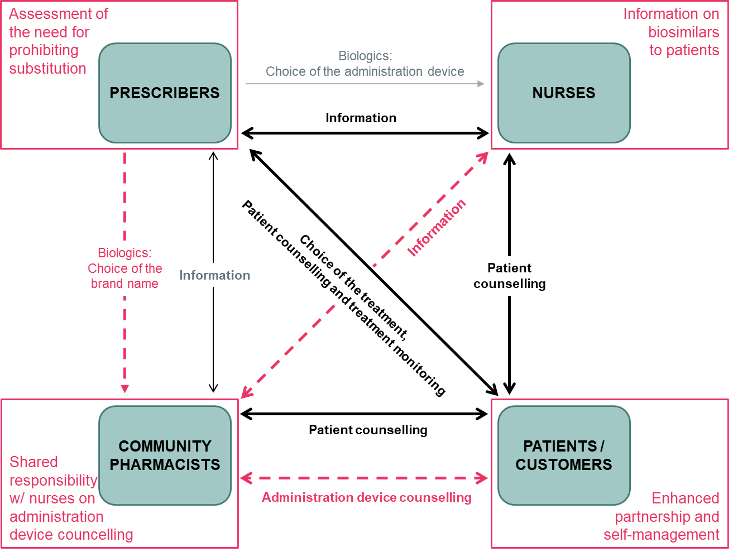
Current trends in biosimilar uptake and special focus on automatic substitution – a symposium report

Abstract: In December 2023, the University of Helsinki, Helsinki University Hospital (HUS), and University Pharmacy (Yliopiston Apteekki) Helsinki collaborated to present the online symposium titled ‘Current Trends in Biosimilar Uptake and Research with Special Focus on Automatic Substitution’. This provided an overview of global trends in biosimilar use and a systematic examination of the implications…

Author(s): Professor Alan Lyles, BSPharm, MPH, ScD, PhD (h.c.), Heinonen E, MD, PhD, Tolonen HM, MSc (Pharm), PhD, Linden K, MSc (Pharm), MSc (Econ), PhD, Sihvo S, PhD, Sarnola K, MSc (Pharm), MSc (Econ), PhD, Airaksinen M, MSc (Pharm), PhD

affordable medicines, automatic substitution, biological medicines, biosimilar, community pharmacy, Finland

DOI: 10.5639/gabij.2025.1402.009


820 views

Editor's Letter

Published on 10 April 2025

Editor’s introduction to the initial issue of the 14th volume of GaBI Journal

In this first issue of 2025, we have some controversial criticism of an article previously published in GaBI Journal [1}, as well as a paper on pricing of biosimilars/biologicals after patent expiry and a meeting report on claimed weakening of FDA regulatory standards for biosimilars and its perceived effects on undermining physician confidence in biosimilar…

Author(s): Robin Thorpe, PhD, FRCPath

DOI: 10.5639/gabij.2025.1401.001


99 views

Original Research

Published on 08 April 2025

An analysis of policy impacts on the price developments of biological medicines after patent expiration

Introduction/Study objectives: A biosimilar is a biological medicine that is developed to be similar to an existing biological medicine (the ‘reference medicine’) for which marketing exclusivity rights have expired. The prices of such medicines are shaped by regulations onpharmaceutical pricing, or the policy of setting the price of a medicine at certain points in the…

Author(s): Peter Schneider, MA, Alexander Guggenberger, BSc, MSc, Siegfried Eisenberg, BSc, MSc, PhD, Lukas Rainer, BSc, MSc

biosimilars, cost containment, pharmacoeconomics, policy measure savings, pricing

DOI: 10.5639/gabij.2025.1401.004


465 views

Meeting Report

Published on 25 March 2025

Biosimilar Red Tape Elimination Act (S.2305): weakening FDA regulatory standards for biosimilars, undermining physician confidence and jeopardizing patient health

Introduction: In the US, some biosimilars that meet additional requirements may be approved as interchangeable products. This means they can undergo pharmacy-level substitution. An online webinar titled ‘Biosimilar Red Tape Elimination Act (S.2305): Weakening FDA Regulatory Standards for Biosimilars, Undermining Physician Confidence and Jeopardizing Patient Health’, was held to discuss its implications on medicines availability, safety…

Author(s): Michael S Reilly, Esq, Ralph D McKibbin, MD, FACP, FACG, AGAF, Professor Philip J Schneider, MS, FASHP, FASPEN, FFIP, Andrew Spiegel, Esq

interchangeable biosimilar, misinformation, switch studies

DOI: 10.5639/gabij.2025.1401.005


846 views

Letters to the Editor

Published on 14 January 2025

Comment on the article ‘Misinformation about interchangeable biosimilars’

Abstract:  The critique of Reilly and McKibben of the meta-analysis conducted by Herndon et al. is factually flawed on several important points. As a result, the conclusions of Reilly and McKibben are not scientifically substantiated. Comment on ‘Misinformation about interchangeable biosimilars undermines US health policy, physician confidence, and patient health’ (GaBI Journal, 2024;13(2):55-60) Dear Editor,…

Author(s): Hillel P Cohen, PhD, Caridad Pontes, MD, PhD, Fernando de Mora, MBA, PhD

biopharmaceutical, critique, interchangeable biosimilar, meta-analysis, misinformation

DOI: 10.5639/gabij.2025.1401.003


701 views

Letters to the Editor

Published on 18 December 2024

Comment on the article by Reilly MS and McKibbin RD

Abstract: Reilly and McKibbin oppose the update of FDA interchangeability guidance that does not require clinical switch studies. However, their arguments lack a scientific basis. Comment on the article by Reilly MS and McKibbin RD: Misinformation about interchangeable biosimilars undermines US health policy, physician confidence, and patient health.GaBI Journal, 2024;13(2):55-60. The US Food and Drug…

Author(s): Adjunct Professor Pekka Kurki, MD, PhD

interchangeable biosimilar, misinformation, switch studies

DOI: 10.5639/gabij.2025.1401.002


677 views

Editor's Letter

Published on 15 December 2024

Third and final issue of GaBI Journal’s 13th volume

This third issue of GaBI Journal is the last of the volume for this year and marks the end of the first year of me taking up the Editor-in-Chief position for the journal. We have seen a very considerable variety of papers submitted and published during 2024. The first Review Article in this issue by…

Author(s): Robin Thorpe, PhD, FRCPath

DOI: 10.5639/gabij.2024.1303.032


477 views

Review Article

Published on 18 November 2024

A review of international initiatives on pharmaceutical regulatory reliance and recognition

Abstract: In light of recent global health challenges, the need for regulatory reliance – where one regulatory authority accepts the decisions of another – has gained significant interest and momentum. A fundamental role of any government is to protect its citizens and promote a healthy lifestyle by ensuring the quality, safety, and efficacy of medical…

Author(s): Vimal Sachdeva, MSc

authorization, best practice, harmonization, pharmaceuticals, recognition

DOI: 10.5639/gabij.2024.1303.034


2.266 views

Interview

Published on 07 November 2024

Transforming health care: CinnaGen’s leadership in follow-on biologicals/biosimilars development and market expansion

Abstract: CinnaGen, the largest biopharmaceutical company in the MENA region, is a leader in developing follow-on biologicals/biosimilars. Dr Haleh Hamedifar, Chairperson of CinnaGen, spoke to GaBI (Generics and Biosimilars Initiative) about the company’s strategic focus, which includes expanding its product portfolio, entering highly regulated global markets, and advancing affordable treatments for conditions such as multiple…

Author(s): GaBI Journal Editor

biosimilars, clinical development, commercialization, MENA (Middle East and North Africa)

DOI: 10.5639/gabij.2024.1303.037


1.049 views

Special Report

Published on 06 May 2024

Physicochemical stability of Azacitidine Accord 25 mg/mL suspension for injection in original vials and polypropylene syringes after reconstitution with refrigerated water for injection

Abstract: The physicochemical stability of Azacitidine Accord, a pyrimidine analogue antineoplastic agent, was assessed after reconstitution with cold water for injection (WFI) and storage in original glass vials and polypropylene (PP) syringes at different temperatures. At 2°C–8°C, stability was observed for 3 days in both containers. At -20°C, stability was maintained for 60 days regardless…

Author(s): Irene Krämer, PhD, Frank Erdnuess, PhD, Judith Thiesen, PhD

azacitidine, physicochemical stability, suspension for injection

DOI: 10.5639/gabij.2024.1302.023


1.378 views

Special Report

Published on 11 September 2024

Physicochemical stability of Bortezomib Accord 2.5 mg/mL and diluted 1 mg/mL intravenous injection solution in punctured original vials and polypropylene syringes

Author byline as per print journal: Irene Krämer, PhD; Frank Erdnuess, PhD; Judith Thiesen, PhD Abstract: This study assessed the physicochemical stability of Bortezomib Accord 2.5 mg/mL solutions for subcutaneous and intravenous injection under various storage conditions. Bortezomib 2.5 mg/mL solutions for subcutaneous injection remained stable for up to 84 days in punctured vials and…

bortezomib, intravenous injection, physicochemical stability, subcutaneous injection

DOI: 10.5639/gabij.2024.1302.015


825 views

Special Report

Published on 11 September 2024

Physicochemical stability of Cabazitaxel Accord in punctured original vials and after dilution with 0.9% sodium chloride or 5% glucose solution in non-PVC bottles

Author byline as per print journal: Irene Krämer, PhD; Frank Erdnuess, PhD; Judith Thiesen, PhD Study objectives: To determine the physicochemical stability of undiluted Cabazitaxel Accord in punctured original vials and after dilution with 0.9% sodium chloride solution or 5% glucose solution in non-PVC bottles at the concentrations 0.1 mg/mL and 0.26 mg/mL. Methods: Punctured…

cabazitaxel, concentrated solution, diluted infusion solution, HPLC, physicochemical stability

DOI: 10.5639/gabij.2024.1302.027


862 views