Articles


Meeting Report

Published on 14 April 2025

Current trends in biosimilar uptake and special focus on automatic substitution – a symposium report

Abstract: In December 2023, the University of Helsinki, Helsinki University Hospital (HUS), and University Pharmacy (Yliopiston Apteekki) Helsinki collaborated to present the online symposium titled ‘Current Trends in Biosimilar Uptake and Research with Special Focus on Automatic Substitution’. This provided an overview of global trends in biosimilar use and a systematic examination of the implications…

Author(s): Professor Alan Lyles, BSPharm, MPH, ScD, PhD (h.c.), Heinonen E, MD, PhD, Tolonen HM, MSc (Pharm), PhD, Linden K, MSc (Pharm), MSc (Econ), PhD, Sihvo S, PhD, Sarnola K, MSc (Pharm), MSc (Econ), PhD, Airaksinen M, MSc (Pharm), PhD

affordable medicines, automatic substitution, biological medicines, biosimilar, community pharmacy, Finland

DOI: 10.5639/gabij.2025.1402.009


1.066 views

Special Report

Published on 06 October 2025

Follow-on biologicals/biosimilars approved in Brazil: September 2025 update

Abstract: In Brazil, the legal framework for approving biosimilars was established in 2010 and the first biosimilar product was approved in 2015. In June 2024, RDC 875 introduced new provisions, including the use of international reference drugs and the possibility of waiving non-clinical and comparative clinical studies under certain conditions. By September 2025, ANVISA had…

Author(s): German Enrique Wassermann, PhD, Sílvia Helena Cestari de Oliveira, MSc

biosimilars, Brazil, clinical studies, regulatory framework

DOI: 10.5639/gabij.2025.1402.008


1.108 views

Original Research

Published on 07 October 2025

Therapeutic equivalence of a formulation of purified micronized flavonoid fraction of diosmin/hesperidin 450 mg/50 mg in healthy adults: an open-label, randomized, single-dose, crossover study

Introduction/Study objectives: Given that the purified micronized flavonoid fraction (diosmin/hesperidin 450 mg/50 mg) is a formulation with low water solubility, granulated form, and low intestinal membrane permeability, the present bioequivalence study was conducted to compare Dipemina® (T: tested) with Daflon® (R: reference product).Methods: A phase I, open-label, randomized, two-period, two-treatment (2x2) crossover study was carried…

Author(s): Katherine Bouyer Sáez, Francisco Fuentes Poblete

bioequivalence, diosmin/hesperidin, purified flavonoid fraction

DOI: 10.5639/gabij.2025.1402.007


1.081 views

Editor's Letter

Published on 10 August 2025

A spectrum of generics and biosimilars: research, reports, and interviews

In this second issue of 2025, we have a diverse spectrum of publications which include one original research paper in the generics area and biosimilar-focused articles which comprise one special report, one meeting report, one interview and one sponsored article.  The first article in this issue is an Original Research paper titled ‘Therapeutic equivalence of…

Author(s): Robin Thorpe, PhD, FRCPath

DOI: 10.5639/gabij.2025.1402.006


109 views

Meeting Report

Published on 25 March 2025

Biosimilar Red Tape Elimination Act (S.2305): weakening FDA regulatory standards for biosimilars, undermining physician confidence and jeopardizing patient health

Introduction: In the US, some biosimilars that meet additional requirements may be approved as interchangeable products. This means they can undergo pharmacy-level substitution. An online webinar titled ‘Biosimilar Red Tape Elimination Act (S.2305): Weakening FDA Regulatory Standards for Biosimilars, Undermining Physician Confidence and Jeopardizing Patient Health’, was held to discuss its implications on medicines availability, safety…

Author(s): Michael S Reilly, Esq, Ralph D McKibbin, MD, FACP, FACG, AGAF, Professor Philip J Schneider, MS, FASHP, FASPEN, FFIP, Andrew Spiegel, Esq

interchangeable biosimilar, misinformation, switch studies

DOI: 10.5639/gabij.2025.1401.005


961 views

Original Research

Published on 08 April 2025

An analysis of policy impacts on the price developments of biological medicines after patent expiration

Introduction/Study objectives: A biosimilar is a biological medicine that is developed to be similar to an existing biological medicine (the ‘reference medicine’) for which marketing exclusivity rights have expired. The prices of such medicines are shaped by regulations onpharmaceutical pricing, or the policy of setting the price of a medicine at certain points in the…

Author(s): Peter Schneider, MA, Alexander Guggenberger, BSc, MSc, Siegfried Eisenberg, BSc, MSc, PhD, Lukas Rainer, BSc, MSc

biosimilars, cost containment, pharmacoeconomics, policy measure savings, pricing

DOI: 10.5639/gabij.2025.1401.004


634 views

Letters to the Editor

Published on 14 January 2025

Comment on the article ‘Misinformation about interchangeable biosimilars’

Abstract:  The critique of Reilly and McKibben of the meta-analysis conducted by Herndon et al. is factually flawed on several important points. As a result, the conclusions of Reilly and McKibben are not scientifically substantiated. Comment on ‘Misinformation about interchangeable biosimilars undermines US health policy, physician confidence, and patient health’ (GaBI Journal, 2024;13(2):55-60) Dear Editor,…

Author(s): Hillel P Cohen, PhD, Caridad Pontes, MD, PhD, Fernando de Mora, MBA, PhD

biopharmaceutical, critique, interchangeable biosimilar, meta-analysis, misinformation

DOI: 10.5639/gabij.2025.1401.003


803 views

Letters to the Editor

Published on 18 December 2024

Comment on the article by Reilly MS and McKibbin RD

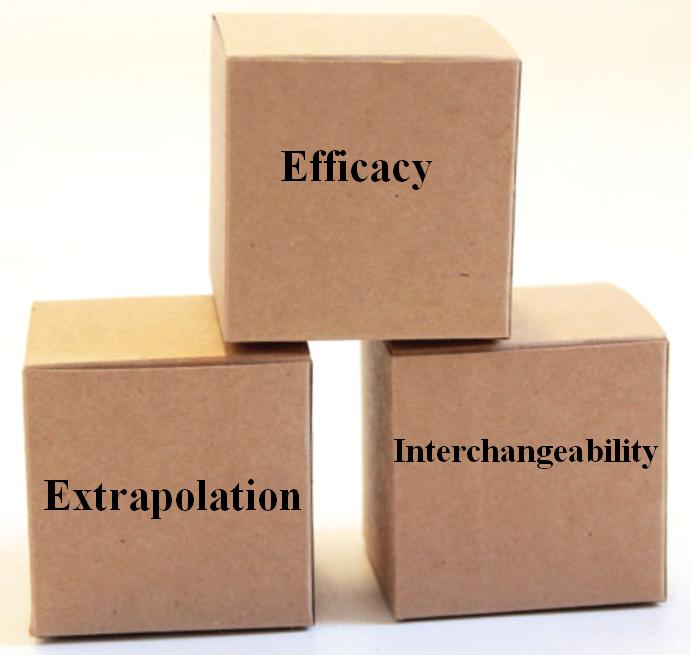
Abstract: Reilly and McKibbin oppose the update of FDA interchangeability guidance that does not require clinical switch studies. However, their arguments lack a scientific basis. Comment on the article by Reilly MS and McKibbin RD: Misinformation about interchangeable biosimilars undermines US health policy, physician confidence, and patient health.GaBI Journal, 2024;13(2):55-60. The US Food and Drug…

Author(s): Adjunct Professor Pekka Kurki, MD, PhD

interchangeable biosimilar, misinformation, switch studies

DOI: 10.5639/gabij.2025.1401.002


820 views

Editor's Letter

Published on 10 April 2025

Editor’s introduction to the initial issue of the 14th volume of GaBI Journal

In this first issue of 2025, we have some controversial criticism of an article previously published in GaBI Journal [1}, as well as a paper on pricing of biosimilars/biologicals after patent expiry and a meeting report on claimed weakening of FDA regulatory standards for biosimilars and its perceived effects on undermining physician confidence in biosimilar…

Author(s): Robin Thorpe, PhD, FRCPath

DOI: 10.5639/gabij.2025.1401.001


156 views

Interview

Published on 07 November 2024

Transforming health care: CinnaGen’s leadership in follow-on biologicals/biosimilars development and market expansion

Abstract: CinnaGen, the largest biopharmaceutical company in the MENA region, is a leader in developing follow-on biologicals/biosimilars. Dr Haleh Hamedifar, Chairperson of CinnaGen, spoke to GaBI (Generics and Biosimilars Initiative) about the company’s strategic focus, which includes expanding its product portfolio, entering highly regulated global markets, and advancing affordable treatments for conditions such as multiple…

Author(s): GaBI Journal Editor

biosimilars, clinical development, commercialization, MENA (Middle East and North Africa)

DOI: 10.5639/gabij.2024.1303.037


1.374 views

Perspective

Published on 23 August 2024

The challenge for drug shortage: lessons learned from the quality issues of Japanese generic drug companies

Abstract:This paper examines the repercussions of recent quality and regulatory crises in Japan’s generic pharmaceutical sector, focusing on incidents involving Sawai Group Holdings (Sawai GHD) and other manufacturers. It provides a comprehensive analysis of the consequences stemming from lapses in good manufacturing practice (GMP) compliance, particularly highlighted by the case of teprenone capsules 50 mg…

Author(s): Takanao Hashimoto, PhD, Akihiko Ozaki, MD, PhD, Hiroaki Saito, MD, Erika Yamashita, Tetsuya Tanimoto, MD, Professor Mihajlo Jakovljevic, MD, PhD, MAE

COVID-19 pandemic, drug shortages, generic drugs, good manufacturing practice, pharmaceutical policy

DOI: 10.5639/gabij.2024.1303.036


2.344 views

Perspective

Published on 21 August 2024

US interchangeability designation: are we ready to cut the Gordian knot?

Abstract:US Food and Drug Administration’s (FDA) current thinking on interchangeability has evolved since the legal designation was first created in 2010. Based on experience, FDA now acknowledges that clinical switching studies are not generally needed for the interchangeability designation as quality, safety and efficacy are established by biosimilarity already. Approval pathways for biosimilars and interchangeable…

Author(s): Gillian R Woollett, MA, DPhil, Joseph P Park, PhD

biosimilars, BPCIA, interchangeability, market exclusivity, quality, switching

DOI: 10.5639/gabij.2024.1303.035


2.843 views